
Extended portraits of four figures who shaped modern Igbo cultural and political life — Nnamdi Azikiwe, Flora Nwapa, Chinua Achebe, and Chimamanda Ngozi Adichie.
Nnamdi Azikiwe (1904–1996)
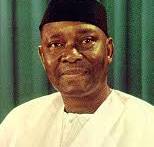
Benjamin Nnamdi Azikiwe — known universally as "Zik" or "Zik of Africa" — was the most significant Igbo political figure of the 20th century's first half, the architect of Nigerian nationalism, and the first President of independent Nigeria. Born in Zungeru, Northern Nigeria, to an Onitsha Igbo family, he spent his formative years in the United States — at Storer College, Howard University, Lincoln University (Pennsylvania), and the University of Pennsylvania — where he encountered African American political thought, Pan-African philosophy, and the intellectual tradition that would shape his entire career.
He returned to West Africa in 1934 as a journalist, founding the African Morning Post in Accra and building a reputation as the most incisive anti-colonial voice in West African journalism. In 1937 he returned to Nigeria and founded the West African Pilot — the newspaper that became the primary vehicle for Nigerian nationalist sentiment for two decades. His editorials were simultaneously practical journalism and political philosophy: calls for Nigerian self-determination rooted in a Pan-African framework that connected the Nigerian struggle to the broader global movement for Black dignity.
His political career traced the arc of Nigerian nationalism: founding the National Council of Nigeria and the Cameroons (NCNC) in 1944, winning the Eastern Region governorship in 1954, serving as the first indigenous Governor-General of Nigeria from 1960, and becoming the first President of the Nigerian Republic in 1963. When the military coup of January 1966 ended the First Republic, he was removed from office. He subsequently supported Biafra during the war — a position he later complicated by returning to Nigeria and continuing his political career within the federal system.
Azikiwe's intellectual legacy is as significant as his political one. His books — Renascent Africa (1937), Liberia in World Politics (1934), and his autobiography My Odyssey (1970) — document the development of a Pan-African political philosophy that shaped a generation of African nationalist leaders. He died in 1996 in Enugu, aged ninety-one, having lived long enough to see the Nigeria he had helped create struggle through six military governments, two more attempts at democracy, and the still-unresolved challenge of building a functional federal state from the diverse peoples of the Niger region.
Flora Nwapa (1931–1993)
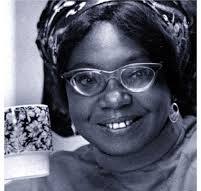
Flora Nwapa was the first African woman to be published by a major international publisher and the first African woman to establish her own publishing house — two achievements that together make her the founding figure of African women's literary history. Born in Oguta, Imo State, into an Oguta Igbo family, she was educated at the University of Ibadan and the University of Edinburgh, and began writing in the early 1960s while working as a teacher and government administrator.
Her novel Efuru (1966) — published by Heinemann in the African Writers Series — was the first novel by an African woman to be published by a major international house. Its subject was revolutionary: an Igbo woman of exceptional ability and personal dignity who refuses to be defined by the failures of her marriages and who ultimately becomes a devotee of Uhamiri, the lake goddess of Oguta — the woman of the lake who "had never experienced the joys of motherhood" but who was "the woman that every woman envied." The novel centres Igbo women's interior lives with a seriousness and specificity that had never before appeared in African fiction.
Her second novel Idu (1970) extended this project, exploring the bonds between women and the relationship between individual women's choices and community expectations. But it was her founding of Tana Press in 1977 — later expanded to Flora Nwapa Books — that represents her most enduring institutional achievement. In establishing her own publishing house, she created the infrastructure for African women's writing to exist on its own terms, outside the commercial and cultural priorities of European publishers. She published her own later works, works by other African women writers, and children's books that gave Igbo children stories about their own world.
Nwapa has been underacknowledged relative to her significance — overshadowed in the critical canon by Chinua Achebe, whose male-centred narrative of Igbo life she was implicitly challenging, and by Buchi Emecheta, whose more explicitly feminist politics attracted more Western critical attention. The recovery of her full significance — as a novelist, as a publisher, as a pioneer of Igbo women's self-representation — is one of the most important projects in African literary scholarship. She died in Enugu in 1993, aged sixty-two, of meningitis.
Chinua Achebe (1930–2013)
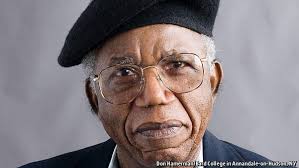
Albert Chinualumogu Achebe was born on 16 November 1930 in Ogidi, Anambra State, the son of a Church Missionary Society teacher. He grew up at the intersection of two worlds — the Igbo traditional culture of his extended family and the Christian mission world of his father's vocation — and this dual inheritance gave him the perspective that would produce his greatest work: the ability to see the precolonial Igbo world from inside and the colonial encounter from both sides simultaneously.
He was educated at Government College Umuahia — the same school that produced Okigbo, Gabriel Okara, and Chukwuemeka Ike — and at University College Ibadan. Things Fall Apart, written when he was in his mid-twenties and published in 1958 by Heinemann, sold over 20 million copies in 57 languages. Its achievement was not merely literary but epistemological: it demonstrated that the precolonial Igbo world was a world of moral complexity, human dignity, and genuine cultural achievement — that colonialism had not arrived in a moral and cultural vacuum, and that what it destroyed had value. The novel did not sentimentalise precolonial Igbo society; it showed its contradictions, its cruelties, and its failures alongside its beauty. This honesty was the source of its moral authority.
His subsequent novels developed the colonial and postcolonial story: No Longer at Ease (1960) — the story of Okonkwo's grandson Obi, caught between tradition and modernity in colonial Lagos; Arrow of God (1964) — widely considered his greatest artistic achievement, a study of the collision between Igbo religious authority and British colonial administration; A Man of the People (1966) — a satirical novel about postcolonial political corruption whose publication just days before the January 1966 coup gave it an uncanny prophetic quality; and Anthills of the Savannah (1987), his return to fiction after twenty years of silence following the Biafra war.
His essays — collected in Morning Yet on Creation Day (1975), Hopes and Impediments (1988), and Home and Exile (2000) — are among the most important critical writings in African literary history, particularly his 1975 essay "An Image of Africa: Racism in Conrad's Heart of Darkness," which demonstrated that Joseph Conrad's celebrated novel was a racist text in which Africa served merely as a backdrop for European psychological drama. The essay was controversial at the time and remains essential reading in postcolonial literary studies.
Achebe was injured in a car accident in Nigeria in 1990 and spent the remainder of his life in a wheelchair, living primarily at Bard College in New York, where he taught. His memoir There Was a Country: A Personal History of Biafra (2012), published a year before his death, reignited debate about the Biafra war and its moral accounting. He died in Boston on 21 March 2013, aged eighty-two.
Chimamanda Ngozi Adichie (b.1977)
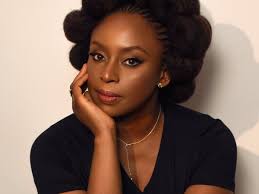
Chimamanda Ngozi Adichie was born on 15 September 1977 in Enugu, Nigeria, and grew up in Nsukka, in the house on the University of Nigeria Nsukka campus that had previously been occupied by Chinua Achebe — a biographical detail that she has described as both inspiring and intimidating. Her father James Nwoye Adichie was a professor of statistics at UNN; her mother Grace was the university's first female registrar. She grew up in an academic household, read voraciously from childhood, and began writing stories as a young child.
She left Nigeria at nineteen to study Communications and Political Science at Eastern Connecticut State University, then transferred to Yale for her BA. She subsequently completed an MFA in creative writing at Johns Hopkins University and an MA in African Studies at Yale. This educational trajectory — unusually wide-ranging and international even by the standards of globally mobile African intellectuals — gave her access to multiple critical frameworks and multiple audiences, and is reflected in the cosmopolitan range of her fiction.
Her debut novel Purple Hibiscus (2003) established her immediately as a writer of extraordinary gifts — a story of a girl growing up in the shadow of a religiously fanatical father, set against the backdrop of post-military Nigeria, written with a precision of observation and a sensitivity to the textures of everyday Igbo life that recalled the best of Achebe. Half of a Yellow Sun (2006), her Biafra novel — winner of the Orange Prize for Fiction — told the story of the war through multiple perspectives, with a particularity of historical detail and emotional depth that made it both the best novel about Biafra and one of the significant historical novels of the 21st century.
Americanah (2013), her third novel, shifted terrain: a story of a Nigerian woman navigating race, identity, and love across Nigeria, the UK, and the United States, it engaged directly with African American racial discourse, with the specific experience of African immigrants in America, and with the question of what "Black" means differently in different national contexts. It was the novel that made her a global literary celebrity beyond the African literary world.
Her non-fiction has reached audiences her novels could not. Her TED talk "The Danger of a Single Story" (2009) — about the damage done by reductive representations of Africa and African people — has been viewed over 30 million times and is widely used in educational curricula worldwide. "We Should All Be Feminists" (2012, adapted from another TED talk and published as a book in 2014) was sampled in a Beyoncé track, translated into Swedish for distribution to all sixteen-year-olds in Sweden, and distributed to secondary school students in multiple countries. Her feminism essay collection Dear Ijeawele, or A Feminist Manifesto in Fifteen Suggestions (2017) extended this public intellectual project. She has become the most globally influential Igbo cultural figure of the 21st century.