
Extended biographical essays on figures connected to Igbo history, the African diaspora, and the Atlantic world — each portrait grounded in primary sources and accompanied by archival imagery.
Edward Wilmot Blyden (1832–1912)
.jpg)
Edward Wilmot Blyden is the founding intellectual of Pan-Africanism and one of the most important thinkers produced by the African diaspora in the 19th century. Born in St Thomas, Danish Virgin Islands, to parents of Igbo descent, he emigrated to Liberia in 1851 after being refused admission to Rutgers Theological College in the United States on racial grounds. This rejection — by a country that would not educate him — redirected his energies toward Africa, where he would spend the rest of his life building the intellectual case for African self-determination, African cultural pride, and the return of diaspora Africans to the continent.
Blyden's intellectual contribution was systematic and far-reaching. His major works — Christianity, Islam and the Negro Race (1887), African Life and Customs (1908), and The African Problem and the Method of Its Solution (1890) — developed arguments that would be taken up by every subsequent generation of African nationalist thought. He argued that African peoples had their own distinct civilisation, worthy of respect and capable of development without European tutelage. He argued that Islam had been more respectful of African cultural identity than Christianity. He argued for the establishment of a West African university that would teach African languages, African history, and African science alongside Western subjects.
His concept of the "African Personality" — the idea that African peoples share a set of cultural values and psychological orientations that distinguish them from European civilisation and that constitute a positive cultural identity rather than a deficit — became the intellectual foundation for Négritude (Aimé Césaire, Léopold Sédar Senghor), for Kwame Nkrumah's pan-Africanism, and ultimately for the Black Consciousness movement. His Igbo ancestry connects him directly to the West African intellectual tradition that he spent his life celebrating and defending.
Blyden served as Liberian Ambassador to Britain and France, as President of Liberia College, and as a diplomatic representative in multiple capacities. He was one of the first African intellectuals to be taken seriously by European academic institutions — not because he accepted European frameworks, but because he challenged them so effectively on their own terms. W.E.B. Du Bois, who knew him personally, described him as "the greatest African of the nineteenth century."
Jaja of Opobo (c.1821–1891)
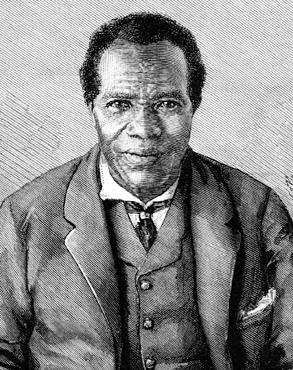
Jaja of Opobo — born Anna Pepple, renamed Jubo Jubogha, known to history as Jaja — is one of the most extraordinary figures in 19th-century West African history. Born into slavery in the Igbo-speaking hinterland approximately 1821, he was sold to a trading house in Bonny on the Niger Delta, where his exceptional commercial talent brought him from enslaved person to head of the most powerful trading house in Bonny within two decades. When internal politics in Bonny turned against him, he led his entire trading house — with all their people, canoes, and commercial networks — out of Bonny and founded a new city-state at Opobo in 1869.
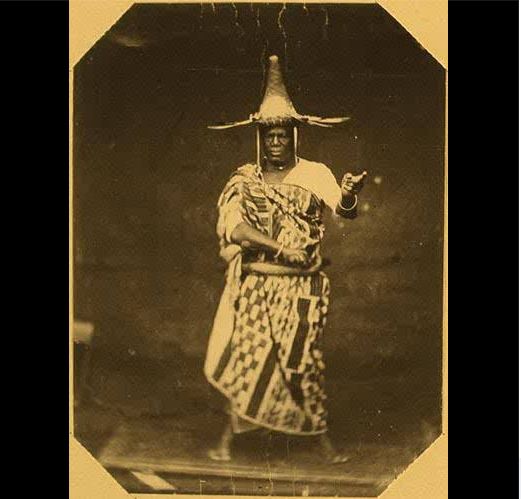
From Opobo, Jaja built a trading empire that controlled the palm oil trade of the eastern Niger Delta with extraordinary commercial acumen. He understood European commercial law and used it against the European traders — he challenged the Royal Niger Company's trading monopoly in British courts, he negotiated treaty terms that protected Opobo's commercial sovereignty, and he consistently outmanoeuvred British trading interests through legal and commercial means rather than military ones. His success made him both admired and feared: admired because his rise from slavery to sovereignty was unprecedented; feared because his commercial sophistication threatened British dominance of the palm oil trade.
In 1887, British consul Harry Johnston invited Jaja to a meeting under a flag of truce, then arrested him and transported him to the Gold Coast for trial. He was convicted of "blocking trade" and exiled to the West Indies — Saint Vincent — where he remained until 1891, when he was finally permitted to return to West Africa. He died at Tenerife on the return voyage. His exile and death were widely regarded across West Africa as a demonstration that British "treaty protection" was worth nothing once it conflicted with British commercial interests.
Jaja's significance is multiple: as a self-made man who rose from slavery to sovereignty; as a commercial strategist of genius who understood and used European legal frameworks against their creators; as a political leader whose city-state demonstrated what African commercial organisation could achieve when left to develop on its own terms; and as a symbol of the betrayal of African trust by British colonial power. His image appears on Nigerian currency. His story is told in every account of Niger Delta history. He remains one of the most compelling figures in the encounter between African commercial culture and European colonial power.
Paul Robeson (1898–1976)
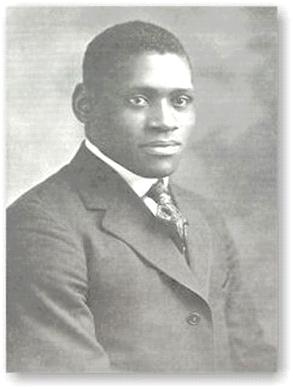
Paul Leroy Robeson was the most multi-talented African American of the 20th century and one of the most significant public intellectuals of his era. His father William Drew Robeson was born into slavery in Martin County, North Carolina, to a family with documented Igbo ancestry — the Robeson family name being common among Igbo-descended enslaved people in the Carolinas. Paul Robeson's extraordinary life was thus rooted, at its historical foundation, in the Bight of Biafra slave trade that had transported hundreds of thousands of Igbo people to the Americas two centuries before his birth.

The achievements of his life span a range that no subsequent figure has matched. He was a Phi Beta Kappa graduate of Rutgers University, an All-American football player, a Columbia Law School alumnus, a professional bass-baritone of international concert renown whose recordings sold millions, a Broadway and Hollywood actor whose performances of Othello and the title role in Emperor Jones are among the most celebrated in 20th-century theatre, a linguist who studied over twenty languages including several African ones, and a political activist whose commitment to workers' rights, anti-colonialism, and Soviet-American friendship led the US government to revoke his passport in 1950.

His rendition of "Ol' Man River" from the musical Show Boat — which he progressively rewrote over decades, changing the submissive original lyrics to defiant ones that better expressed his political position — is one of the most significant acts of artistic and political reinterpretation in American cultural history. His concerts for workers, for Spanish Civil War veterans, for anti-colonial movements across the world, were acts of political solidarity as much as artistic performance.
The US government's revocation of his passport — which prevented him from performing internationally for eight years — effectively ended his career at its peak and caused a psychological and physical deterioration from which he never fully recovered. He died in Philadelphia in 1976, largely forgotten by the mainstream American culture that had once celebrated him. His rehabilitation — as a figure of extraordinary achievement, extraordinary principle, and extraordinary courage — has been gradual and incomplete. His Igbo ancestry, recovered through genealogical research, connects him to the long line of Igbo-descended achievers in the Americas whose excellence was produced in defiance of the system that enslaved their ancestors.
James Africanus Beale Horton (1835–1883)
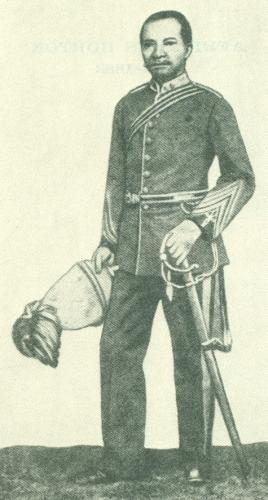
James Africanus Beale Horton was born in Gloucester, Sierra Leone, to Igbo parents who had been liberated from a slave ship by the Royal Navy and resettled in the Colony of Freetown as "recaptives." His very existence was a product of the British abolition of the slave trade: had the Navy not intercepted the ship carrying his parents, he would have been born in the Americas to enslaved parents, and the intellectual tradition he founded would not have existed. Instead, he was born free in Freetown, educated in mission schools, selected for advanced study at King's College London and the University of Edinburgh, and became in 1859 one of the first West Africans to qualify as a medical doctor from a British university.
He served as a surgeon in the British Army in West Africa for twenty years, rising to the rank of Lieutenant Colonel — the highest military rank achieved by any African in the British Army to that point. But his significance lies not in his military career but in his intellectual work. His books — West African Countries and Peoples (1868), Letters on the Political Condition of the Gold Coast (1870), and The Disease of Tropical Climates and their Treatment (1874) — made arguments that would not become mainstream for another century.
In West African Countries and Peoples, written forty years before the Scramble for Africa had been completed and sixty years before any African country achieved independence, Horton argued systematically that West African peoples were fully capable of self-government and political development, that the apparent backwardness of African societies was a consequence of the slave trade and colonial disruption rather than of inherent incapacity, and that Britain's proper role in Africa was to prepare its colonies for self-governance rather than to exploit them in perpetuity. These arguments were considered eccentric in 1868; they became the foundation of the African nationalist movement that achieved independence a century later.
His Igbo ancestry — maintained in family memory across his Sierra Leone upbringing — connects him to the recaptive Igbo communities of Freetown that constitute the oldest organised Igbo diaspora in the world. He is one of the founding figures of the West African intellectual tradition, and his combination of scientific training, political vision, and African cultural pride makes him a direct ancestor of the pan-African movement that Du Bois, Azikiwe, and Nkrumah would develop in the 20th century.
Edward James Roye (1815–1872)
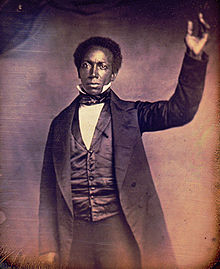
Edward James Roye was the fifth President of Liberia (1870–1871), the first president of the True Whig Party, and the first Liberian head of state to come from the "recaptive" African community rather than from the Americo-Liberian settler elite. Born in Newark, Ohio, in 1815 to a family of free Black Americans with Igbo ancestry — his family's origins in the enslaved communities of North Carolina, where Igbo ancestry was particularly common, are documented in genealogical records — he emigrated to Liberia in 1846 and built a successful commercial career before entering politics.
As president, Roye pursued an ambitious agenda of Liberian development, including the negotiation of a £100,000 loan from British bankers to fund infrastructure. The terms of this loan — which Roye's opponents claimed were usurious and which he was accused of misrepresenting to the Liberian legislature — became the pretext for his impeachment and removal from office in November 1871, less than two years after his election. He died shortly after his removal, reportedly drowned while attempting to escape with a portion of the loan proceeds — the precise circumstances remain disputed.
Roye's significance extends beyond the details of his controversial presidency. He was a man of Igbo descent, born free in Ohio, who chose to build his life and career in Africa and who rose to the highest political office in the world's first Black republic. His presidency demonstrated both the possibility of African American achievement in Africa and the fragility of democratic institutions in the post-slavery era. His fall demonstrated the limits of that achievement — the vulnerability of anyone who challenged the established Americo-Liberian elite, regardless of their individual capability.
Bussa (died 1816)
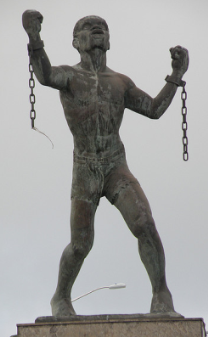
Bussa — his full name is not recorded in any surviving document, reflecting the systematic erasure of enslaved African identity — was an African-born enslaved man who led the largest slave revolt in Barbadian history. On Easter Sunday, 14 April 1816, Bussa led an uprising of approximately 5,000 enslaved people across Barbados, setting fire to sugar fields and confronting the colonial militia in armed conflict. The rebellion was suppressed within three days by British regular troops; Bussa was killed in battle. More than 200 enslaved people were subsequently executed and 70 deported.
Bussa's African origin is documented but his specific ethnic identity has been a subject of historical debate. The strongest evidence points to Igbo origin — consistent with the significant Igbo presence in the enslaved population of Barbados, which had received substantial numbers of enslaved people from the Bight of Biafra. The name "Bussa" has been traced to possible Yoruba or Igbo linguistic origins. Regardless of his specific ethnic identity, he represents the documented pattern of West African — and specifically Bight of Biafra — resistance to enslavement in the Caribbean.
Bussa is the national hero of Barbados. A bronze statue of him — arms raised, chains broken — stands at the Emancipation Statue roundabout in Bridgetown, erected in 1985 to mark the 150th anniversary of emancipation. He is the first figure of the Caribbean slave resistance tradition to be memorialised with a national monument in the country where he fought. His rebellion, though it failed militarily, contributed to the growing pressure on the British Parliament that led to the Slavery Abolition Act of 1833.
Aimé Césaire (1913–2008)

Aimé Fernand David Césaire was a Martinican poet, playwright, and politician who co-founded the Négritude movement and wrote some of the most important anti-colonial literature of the 20th century. Born in Basse-Pointe, Martinique, he studied in Paris, where he encountered Léopold Sédar Senghor of Senegal and Léon-Gontran Damas of French Guiana, and together they developed the Négritude philosophy — the assertion that Black African peoples share a cultural identity and a set of values that must be affirmed rather than suppressed, and that the devaluation of African culture by European colonialism must be directly confronted and reversed.
His major poetic work, Notebook of a Return to the Native Land (Cahier d'un retour au pays natal, 1939), is one of the founding documents of Francophone African and Caribbean literature — a long poem of extraordinary rhetorical power that moves from self-loathing to self-affirmation, from despair at the colonial condition to rage at its perpetrators, to a vision of Black dignity and Black pride that the colonial world had systematically denied. His political essay Discourse on Colonialism (1950) is the most powerful short statement of the moral bankruptcy of European colonialism written in any language.
Césaire's connection to the Igbo experience is through the broader Atlantic world that the slave trade created. Martinique received significant numbers of enslaved Africans from the Bight of Biafra; Césaire himself was of partly African descent whose specific origins in the slave trade period are not fully recoverable. But his intellectual project — the recovery of African cultural dignity, the refusal of the European claim to cultural superiority, the insistence on the full humanity of African-descended people — is continuous with the project of Igbo cultural recovery that Mkomigbo represents. Fanon, who was Césaire's student in Martinique, extended his teacher's insights into the most powerful theory of anti-colonial psychology ever written.