
The landscape of Igbo biographical history — who left records, why, and what those records reveal about the societies they came from.
The Problem of Individual Records in Igbo History
Biographical history requires documents: letters, diaries, court records, newspaper accounts, photographs, testimony. For much of precolonial African history, these records were not produced in written form, or were not preserved, or were destroyed by colonial administrations who had little interest in African individual lives. The precolonial Igbo kept no written archives. What survives is oral tradition, archaeology, and the observations — often biased and incomplete — of European traders, missionaries, and administrators.
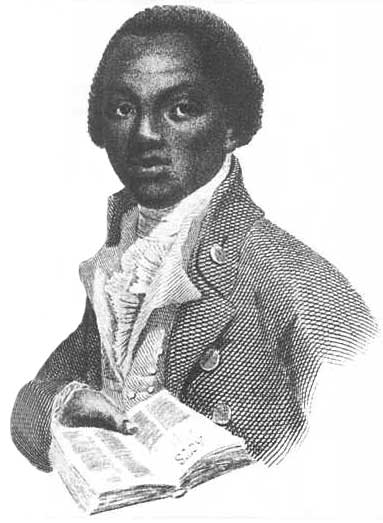
This means that biographical history of Igbo and African figures becomes possible, in detailed written form, primarily from the 18th century onward — with Equiano as the first major figure who left a substantial self-written record. Before him, individuals must be reconstructed from fragments: the unnamed Igbo-Ukwu master who cast the bronzes, the unnamed women who led the 1929 Women's War. These people were as significant as those whose names we know. The record simply did not preserve them.
Three Archives
The oral archive — genealogies, praise songs, funeral orations, and community histories preserved in living memory — is the oldest and richest biographical archive. It is also the most endangered: each generation that does not transmit it loses a portion permanently.
The colonial archive — administrative reports, census records, court transcripts, and missionary letters — contains significant biographical information about Igbo people, but filtered through the perceptions and purposes of colonial officials. Reading it for Igbo biographical history requires constant critical awareness of its limitations and distortions.
The self-written archive — the autobiographies, memoirs, novels, letters, and interviews produced by literate Igbo people from Equiano onward — is the richest and most direct biographical source. It reflects the experiences of those who were literate and whose lives were considered interesting enough to document. The Igbo domestic worker, the Igbo farmer, the Igbo market woman — their lives are largely absent from the self-written archive, though present in community memory and oral tradition.
The Mission-School Generation
Government College Umuahia, founded in 1929 on the model of a British public school, educated Achebe, Okigbo, Chukwuemeka Ike, Gabriel Okara, and I.N.C. Aniebo — a concentration of literary talent in a single institution in a single generation that has no parallel in African educational history. Their autobiographies, interviews, and collected letters provide unusually rich biographical material.
Women's Lives and the Biographical Gap
The biographical record for Igbo women is thinner and harder to recover than the record for men. Colonial archives recorded men in positions of formal authority. Mission education, while available to women, was oriented toward domestic training. The history of Igbo women's lives must be recovered from sources that the women themselves did not control — and from the fiction and oral tradition in which they encoded their experience. Flora Nwapa's novels are biographical sources as well as literary ones.
The Biafra Generation
The war of 1967–1970 produced an intense biographical record. International journalists documented Biafran leadership. Chinua Achebe, Wole Soyinka, and others wrote memoirs. The generation that survived the war and entered the diaspora has produced one of the richest biographical archives in postcolonial African history — and one of the most painful, because so much of what it records is loss.