Sierra Leone and the Igbo — the recaptive communities of Freetown, the Igbo presence in the oldest African diaspora city, and the intellectual tradition that Igbo-descended Sierra Leoneans built.
The Recaptive Community
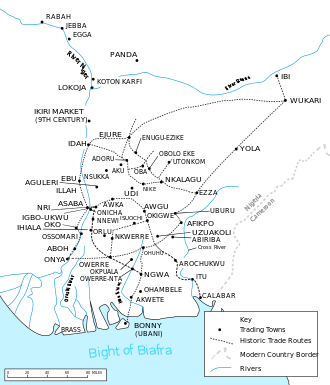
The oldest organised community of Igbo people outside Nigeria is not in London or Houston — it is in Freetown, Sierra Leone. When the British Royal Navy intercepted slave ships in the Atlantic after the abolition of the slave trade in 1807, the enslaved people aboard were taken to Freetown — the Colony of Sierra Leone, established in 1787 as a settlement for freed slaves — and resettled there as "recaptives" or "liberated Africans." Between 1808 and 1863, approximately 74,000 recaptives were settled in Freetown and its surrounding villages. A significant proportion of these were Igbo — taken from the Bight of Biafra by slavers and intercepted before they could be transported across the Atlantic.
These Igbo recaptives found themselves in a new and disorienting environment: a British colonial settlement, governed by British law, populated by a mixture of previously freed Black Americans (the "Nova Scotians" and "Black Poor"), Jamaican Maroons, and recaptives from across West Africa. They had lost their community networks, their family connections, and their cultural context. They organised themselves partly along ethnic lines — Igbo recaptives settled together in specific villages around Freetown — and maintained aspects of Igbo cultural practice, including the Ekpe society, within their new Sierra Leonean context.
The Krio Community and Igbo Roots
The descendants of the Freetown recaptives — including the Igbo recaptives — became the Krio people of Sierra Leone, who developed a distinctive Creole language (Krio), a distinctive cultural identity, and an extraordinary record of educational and professional achievement in the 19th and early 20th centuries. The Krio community produced the first West African doctors, lawyers, journalists, and politicians educated in European institutions — people like James Africanus Beale Horton (of Igbo descent), who became one of the first West Africans to qualify as a British Army surgeon and one of the founding intellectuals of African nationalism.
The Igbo roots of significant portions of the Krio community are documented in genealogical records, in oral family traditions, and in the cultural practices that Igbo recaptives brought to Freetown. The Ekpe society — the secret society of the Cross River area that used Nsibidi symbols and exercised commercial and judicial authority — was maintained by Igbo and Efik recaptives in Freetown and became one of the cultural foundations of Krio identity. Contemporary genetic studies of Sierra Leonean Krio communities consistently find significant Igbo genetic ancestry.
The Aku Community of the Gambia
A parallel community of Igbo and Yoruba recaptives settled in the Gambia — where they are known as the Aku — following a similar pattern of naval interception and resettlement. The Aku community of Banjul (formerly Bathurst) maintained close connections with the Freetown Krio community and shared much of their cultural and intellectual tradition. The Gambian Aku, like the Sierra Leonean Krio, produced a disproportionate number of West Africa's early professional class — doctors, lawyers, clergy, and civil servants whose education and cultural formation was shaped by their recaptive heritage.
The Intellectual Legacy
The intellectual tradition produced by Igbo-descended Sierra Leoneans and Gambians in the 19th century is one of the most significant in West African history. Horton's arguments for West African self-government, written in the 1860s, were decades ahead of their time. Edward Wilmot Blyden — of Igbo descent through his parents, born in the Virgin Islands but spending most of his career in Liberia and Sierra Leone — developed the Pan-African philosophy that would shape the entire 20th-century African independence movement. Samuel Ajayi Crowther — a Yoruba recaptive who became the first African bishop of the Anglican Church — translated the Bible into Yoruba while based in Sierra Leone.
These figures demonstrate what the recaptive communities of Freetown produced when given access to education and opportunity: intellectual and professional achievement of the highest order, combined with a political vision that consistently exceeded what the colonial powers were prepared to offer. The Igbo contribution to this tradition — through the recaptive community, through figures like Horton and Blyden — is one of the least-known chapters of Igbo diaspora history and one of the most significant.