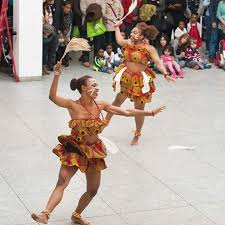
Igbo youth — the generation born after the Biafra war, coming of age in post-military Nigeria and the global diaspora, and the cultural and political energy they are bringing to the Igbo world.
Who They Are
The Igbo youth generation — broadly defined as those born between 1980 and 2005 — is the first generation to grow up entirely in the post-war, post-military, and increasingly globalised Nigeria. They have no personal memory of the Biafra war; they know it through family testimony, through Achebe and Adichie, and increasingly through IPOB's political mobilisation of war memory. They grew up in a Nigeria shaped by structural adjustment, by the collapse of public services, by the oil boom and bust, and by the rapid expansion of evangelical Christianity. Many of them — perhaps a majority of the diaspora cohort — grew up with English as their primary language and Igbo as a heritage language they understand imperfectly or not at all.
This generation is also the most educated, most globally connected, and most economically ambitious in Igbo history. The Igbo emphasis on education — which produced the "Igbo miracle" of post-war reconstruction and the extraordinary professional achievement of the diaspora generation — has not diminished; if anything, it has intensified. Young Igbo in Nigeria and the diaspora pursue education with the urgency of people who understand that credentials are the primary route to security in an unstable world.
The Language Question
The most urgent cultural challenge facing the Igbo youth generation is the language. A growing proportion of young Igbo — especially in urban Nigeria and in the diaspora — cannot speak Igbo fluently, or cannot speak it at all. The causes are structural: English is the language of education, of professional life, and of social mobility in Nigeria; Igbo-medium education barely exists; and in diaspora contexts, children who speak Igbo at home still spend the vast majority of their waking hours in English-speaking environments.
The consequences of language loss are not merely sentimental. Language carries culture: the proverbs, the naming traditions, the ritual vocabulary, the oral literature, the specific ways of framing relationships and obligations that Igbo culture has developed — all of these are encoded in the language and cannot be fully translated into English without losing something essential. A generation that cannot speak Igbo is a generation that can know about Igbo culture but cannot fully inhabit it.
The response to this challenge is uneven but real. Saturday Igbo language schools in diaspora cities. Igbo-language content on social media — YouTube channels, TikTok accounts, Instagram pages — that make the language present in the digital environments where young people spend their time. Language learning apps with Igbo content. Families who make the deliberate choice to speak Igbo at home even when English is easier. These efforts are insufficient to reverse the language shift — but they are also evidence that many young Igbo understand what is at stake and are choosing to resist it.
Political Consciousness
The Igbo youth generation has a higher degree of explicit political consciousness about Igbo marginalisation than any previous generation — partly because of social media, which makes it possible to share information about political exclusion and injustice at scale; partly because of IPOB's mobilisation, which has given the self-determination argument a platform and an audience it has never had before; and partly because the experience of seeking opportunity in a Nigerian system that consistently disadvantages Igbo has made the political reality concrete and personal rather than abstract and historical.
This political consciousness is not uniform. Some young Igbo are ardent IPOB supporters. Others are committed Nigerian federalists who believe that Igbo interests are best served by engagement within the Nigerian system. Many are somewhere between these positions — deeply aware of Igbo marginalisation but uncertain about what the appropriate political response is. The generational diversity of Igbo political opinion is itself a strength: it produces debate, it resists the capture of Igbo political identity by any single movement, and it forces advocates of every position to make their case rather than assuming assent.
Culture and Creativity
Young Igbo are producing some of the most significant creative work in contemporary African culture. Chimamanda Ngozi Adichie — born 1977, the leading edge of this generation — has been followed by novelists, musicians, visual artists, filmmakers, and entrepreneurs who draw on Igbo cultural heritage while operating in global creative economies. Afrobeats — the Nigerian popular music genre that has achieved global commercial success — has significant Igbo representation. Nollywood — Nigeria's film industry, the second-largest in the world by volume — has substantial Igbo creative and entrepreneurial involvement. The global appetite for African creative work is creating opportunities for young Igbo artists that earlier generations could not have imagined.
The challenge for this creative energy is connection to roots: whether the Igbo cultural heritage — the language, the cosmological framework, the oral tradition, the specific Igbo ways of understanding the world — will remain a living source for young Igbo creativity, or whether it will become a set of surface references in work that is fundamentally formed by other cultural frameworks. The answer will depend partly on the success of the language and cultural revitalisation efforts, and partly on the choices of individual artists who must decide how deep their roots need to go.